
Zotero as a Free PDF Library Manager
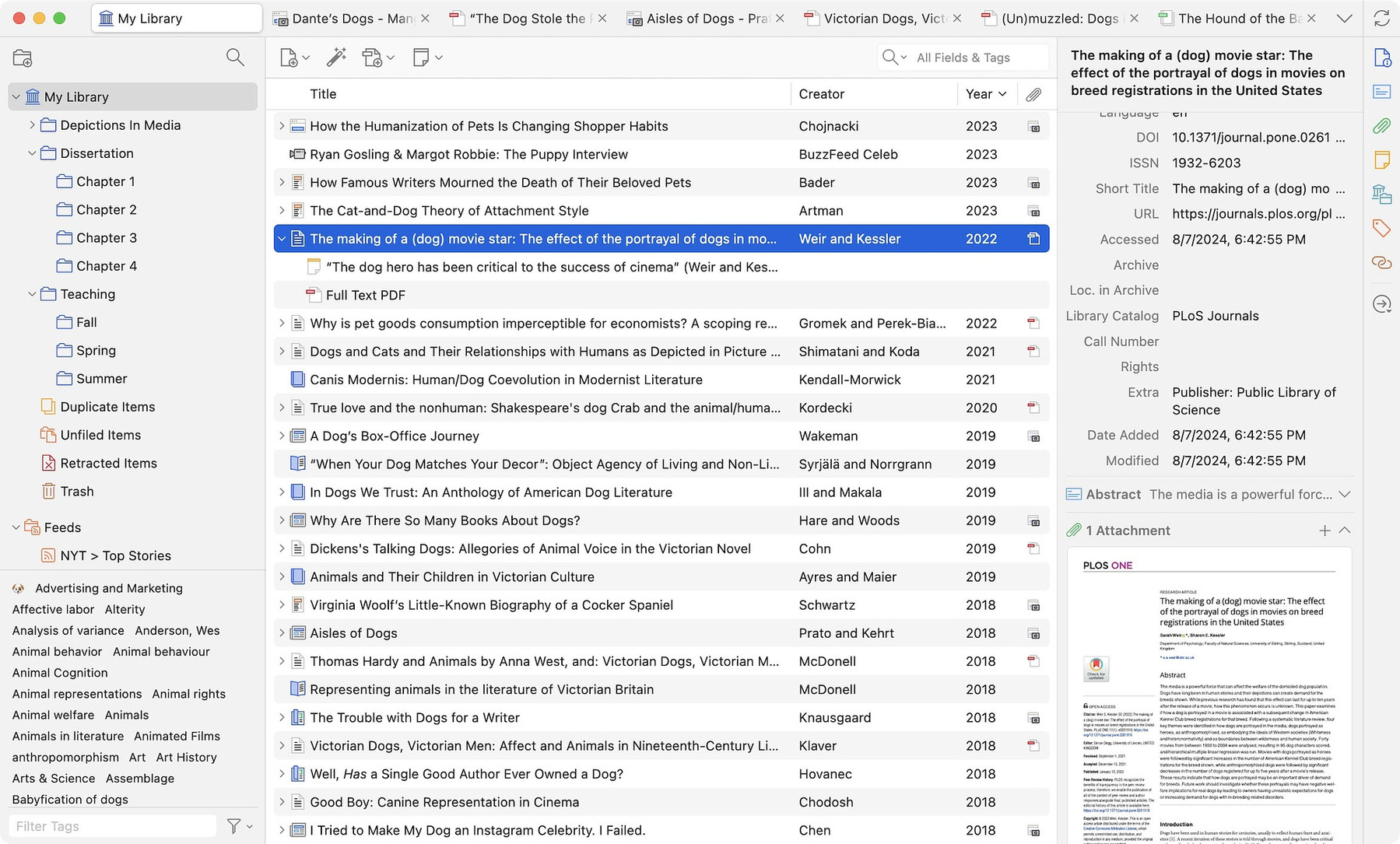
I recently crowd-sourced ideas for a better way to catalog,
annotate and search my collected PDFs, mainly software and hardware user
manuals with a few odds and ends thrown in. The top suggestions were:
- Zotero - the app I chose
- DevonThink - expensive when all I want is PDF searches
- Eagle Filer - what I've been using, but I want something that is native to Apple silicon, works on IOS and is lightweight as a way to search PDFs only
- Paperless-ngx - Interesting, but requires Docker
- Obsidia - not suitable because the plugin required for text searched creates too many support files
Zotero
I chose Zotero, because it's free, lightweight and offers an iOS app using the same data. Zotero can import multiple files at once. It has built in tools for highlighting and making annotations to PDFs. There are numerous plugins available, including:
- AutoIndex - Keeps the full-text index updated. Beta release. If you have ZotFile installed, Auto-index will also kick off auto-extraction of notes.
- PDF Translate - Provides PDF translation for the built-in PDF reader in Zotero
- PDF Preview - Preview Zotero attachments in the library view.
- Zutilo - Adds additional editing functions and exposes Zotero functions for keyboard shortcuts
Zotero is designed to to manage bibliographic data and related research materials, something for which I have little use. I can however use its browser import tools and added ability to add epub and HTMS archives to my research library. It is compatible with SingleFile, an open-source project for saving HTML archives of web pages. Zotero allows you to attach notes to PDFs, retrieve their metadata and other tasks. You can organize PDFs in folders and collections. The Zotero website provides extensive information, including instructional screencasts, troubleshooting tips, a list of known issues, and user forums.
Permissions Reset 2 - Free Troubleshooting Tool
One of the first steps in troubleshooting a misbehaving Mac for
many years has been to repair the disk permissions, currently a feature
of Disk First Aid, accessed through Disk Utility or the terminal if you
are savvy. That can be a bit of overkill if you are primarily concerned
with a single file, folder or app, though. it's time consuming and
affects your entire drive.
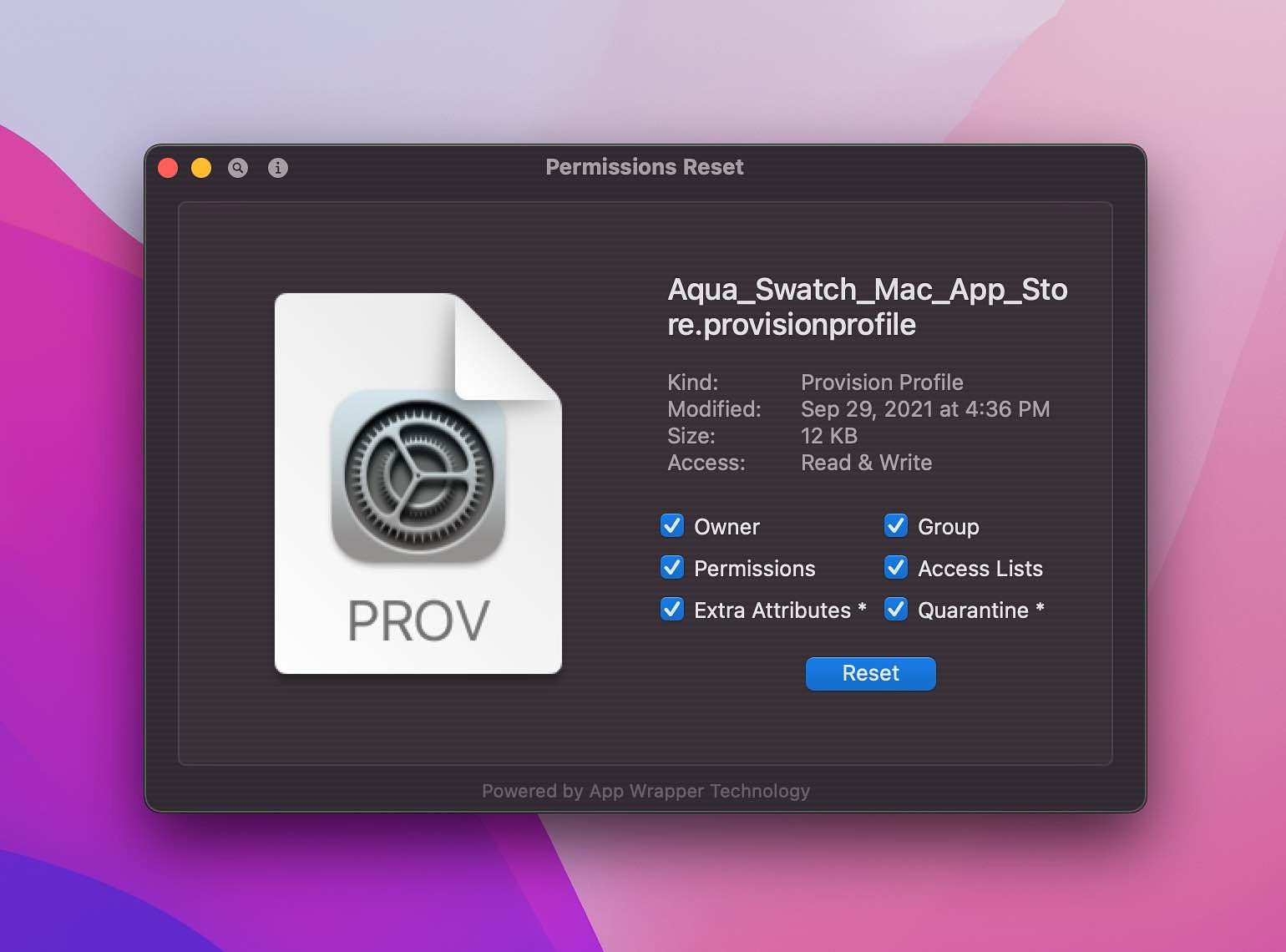
If you have files, folders or apps that cannot be opened or files that refuse to have changes saved to them, there is a free tool that can quickly solve the issue if it is permission related. Permissions Reset 2 from Taiwanese developers Ohanaware can reset the owner, group, access permissions, Access Control Lists (ACLS), Extended Attributes (including Quarantine) to default settings, simply by dragging an app, folder or file into Permissions Reset, selecting what you'd like reset, then clicking on "Reset".
The app requires macOS 10.13 or newer and is compatible with Sequoia, although it has not been updated since 2021. . If you are familiar with the binary and reversible nature of disk permissions, this shouldn't give you pause. It isn't Apple Silicon native, so if you don't want to use Rosetta, then this isn't for you. If you get anxiety if your apps aren't updated every 15 minutes, then this probably isn't for you either.
You can download the app from the developer's website.
Setapp Goodness and Tips
Setapp
is an app subscription service ($9.99 a month) owned by the Ukrainian
company Macpaw. It has approximately 1 million subscribers, which is a
good testament to its usefulness. Here are some of the things I've
learned in a year and half of being a customer.
Unfortunately, Macpaw is a frequent target of Russian trolls because of the ongoing war between the two countries. Macpaw also makes the utility suite, CleanMyMac, which some people confuse with an older Mac malware program, MacKeeper. The two are not related. If you read the tech press, you'll see good reviews of Setapp. If you rely on Reddit or anonymous online sources, you are likely to run into those pesky Russians I mentioned.
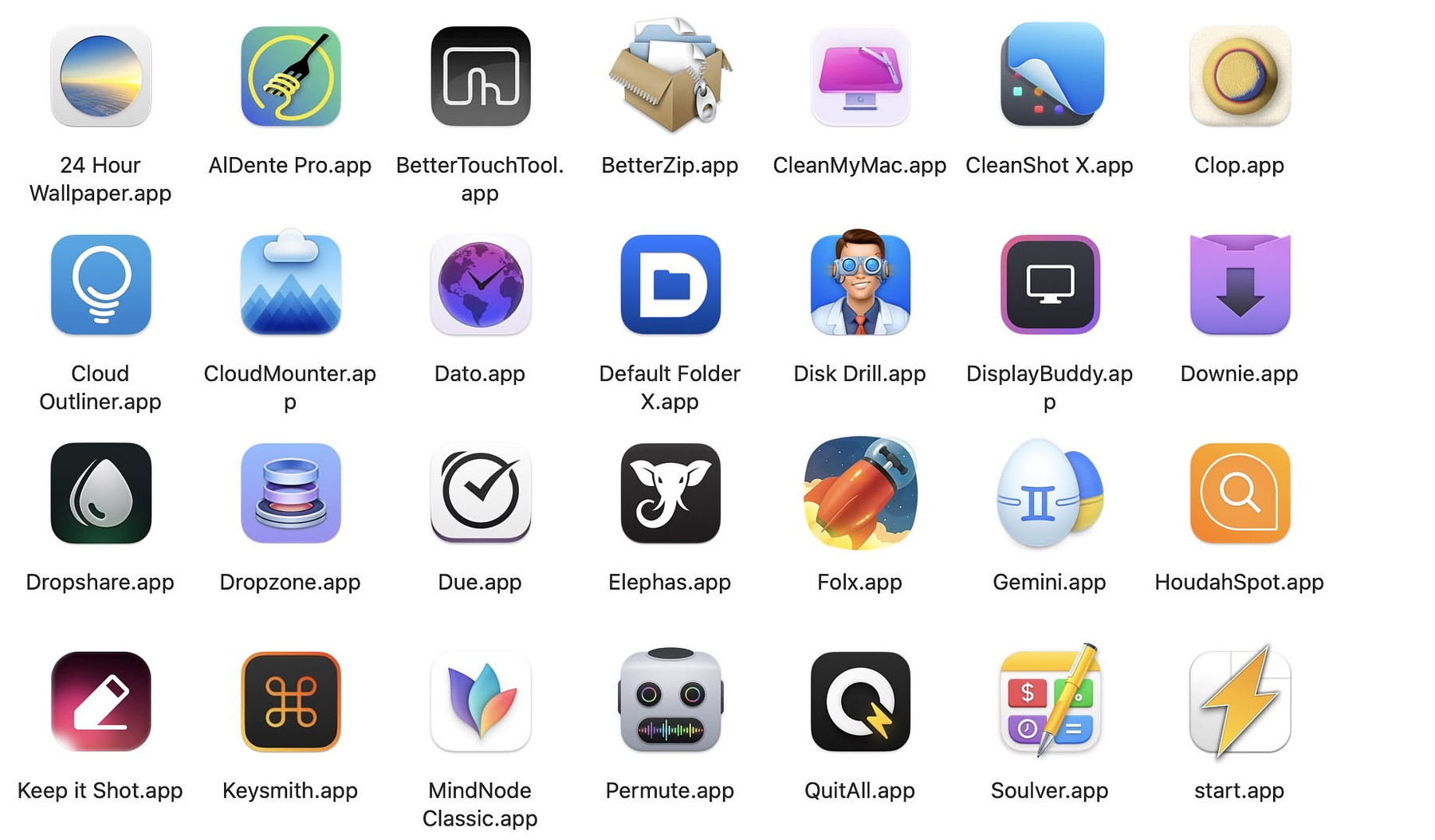
I get tremendous value from my Setapp subscription. The numbers fluctuate a bit, but I currently have 42 apps from the service installed. More than a dozen of those apps are login items that are always running on my Mac. Obviously, they play a vital part in my workflow.
Anyone can try Setapp and all of its app for free for seven days, however if you use my referral link and code PLUMMER you will get 30 days free instead of seven. Also if you are a student, you are eligible for Setapp at 50% off. And, finally, anyone who pays by the year gets a 10% discount.
One tip I can offer is to get your own API key from Open.AI for use with AI apps like Typing Mind or Elephas. It is much cheaper. In a year of constantly using my API with multiple apps, I've spent $15.
If you have any apps from Setapp that you have already purchased, consider using the Setapp version while you have a subscription since it adds to the money that the developer make. It's just a nice thing to do. Brett Terpstra wrote a script and an automator workflow that will tell you if any of the apps on your computer are also on Setapp.
One last thing - I tried the iOS add-on and didn't get that much from it. I do have the add-on to run the apps on a second machine though. It doesn't add that much and it comes in handy.
Here's a List of the Login Apps I Use
- PopClip - A Must Have Productivity App | AppAddict
- Bartender - Still Best in Class | AppAddict
- AlDente Pro - Charge Limiter | AppAddict
- 24 Hour Wallpaper from Jetson Creative | AppAddict
- Better Touch Tool Favorites | AppAddict
- CleanShot X | AppAddict
- Clop - Copy Big, Paste Small, Send Fast | AppAddict
- Dato - A Full Featured Menu Bar Calendar | AppAddict
- Default Folder X an OG App For Mac Power Users | AppAddict
- Disk Drill Revisited - Recovering 87K Files | AppAddict
- Dropzone 4 - A Little Pricey But Versatile | AppAddict
- QuitAll - Amico Apps
- Start from Innovative Bytes | AppAddict
Other Setapp Offerings I Have Reviewed
- Permute - Powerful, Easy to Use Media Converter for Images, Video and Audio | AppAddict
- TripMode - Data Usage Monitor and Control | AppAddict
- Downie - Video Downloader | AppAddict
- Trickster - Manage Your Files Like a Pro | AppAddict
- TextSniper | AppAddict
- Unclutter - Clipboard Manager, File Shelf, Floating Notes - All in One | AppAddict
- MarsEdit - Making Blogging Easier | AppAddict
- SnapMotion - High Quality Image Captures from Video, Made Easy | AppAddict
- Presentify - An App for the Future | AppAddict
- Elephas Did What Others Wouldn't | AppAddict
- Keysmith - Record Automation Macros With Ease | AppAddict
- Noizio - A Background Sound App for Mac | AppAddict
- Widget Wall | AppAddict
- Almighty - Tweaking and Utility Collection | AppAddict
- Paletro - Add a Command Palette to Any App | AppAddict
- Unite 5 and Coherence X 4 - Site Specific Browsers | AppAddict
- An Unemotional Look at Clean My Mac X | AppAddict
- Plus AI from MacPlus - A Convenient and Well Though Out App | AppAddict
- Pie Menu | AppAddict
- Pathfinder by Cocoatech | AppAddict
Full list of apps on Setapp, listed by popularity
Apps for Photo Archiving Workflow
I'm in the process of removing my data from most of the big US
based tech companies in favor or smaller, more privacy focused
companies. I do not want my files to be subject to US government
subpoenas or other invasive security threats from which Google, Amazon,
Meta or Microsoft can profit. I've downloaded my photo backups from
Amazon and Google, made local backups and set up a self hosted photo
server. I will also be using Ente, a data
storage provider using E2E open-source software.
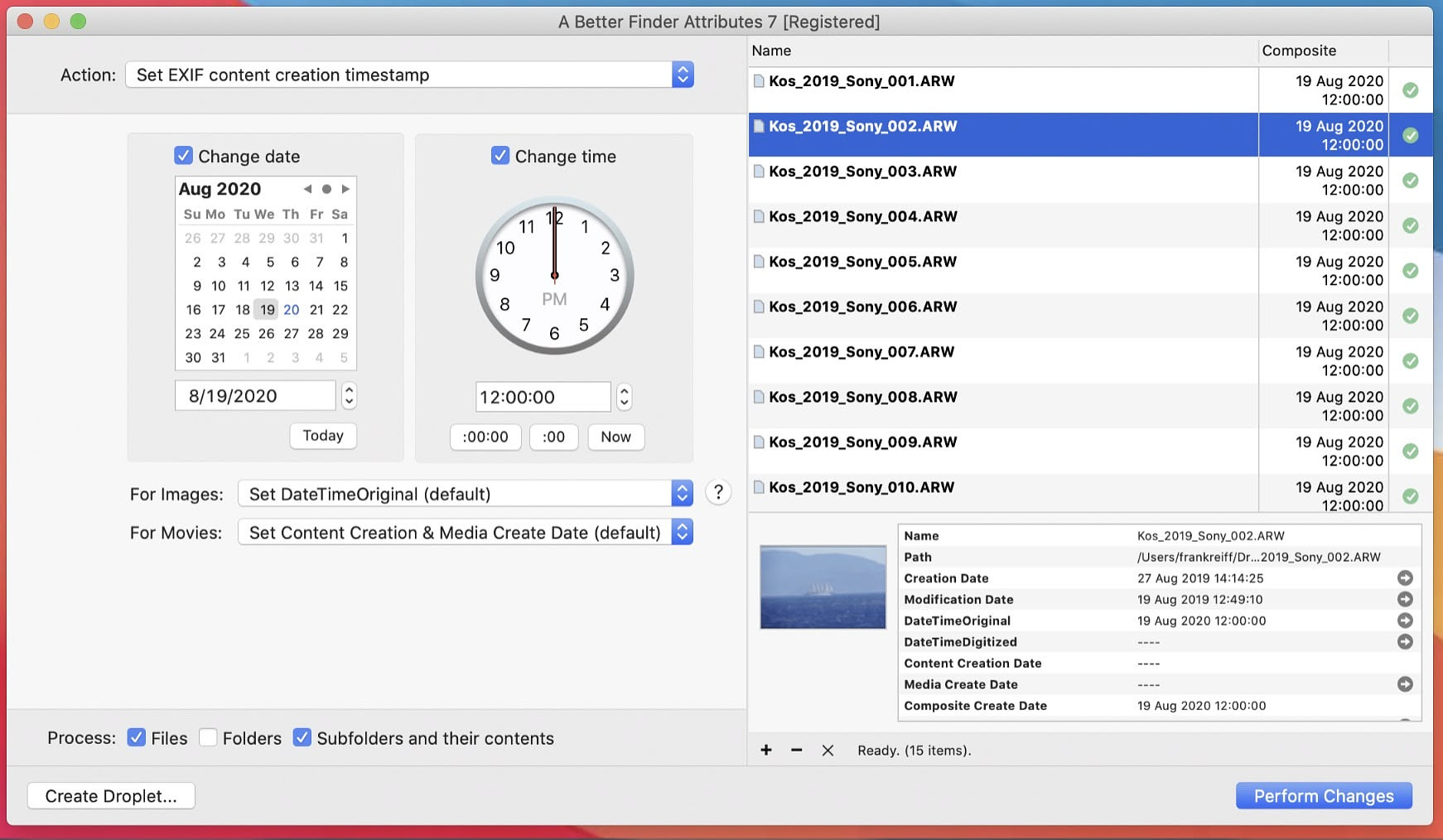
When downloading my stored photos, I am dealing with cell phone photos, scanned images, DSLR photos and downloaded Internet images. The files from cell phones and cameras contain EXIF data. The scans and Internet files do not. To set the file creation date to match the EXIF data, I used A Better Finder Attributes. by PublicSpaces.
To rename the files so that they file name matches or contains the date the photo was taken, I am using Transnomino, a free file renaming utility that offers renaming based on factors as simple as text replacement to complex replacements based on regular expressions and text-based file attributes.
For dealing with large amounts of zipped archives, I'm using Better Zip because of it's feature that allows you to save workflows that unarchive the files in a variety of locations. It also deals with archive errors better than other utilities that aren't really designed for queued files operations. Better Zip also provides a Quicklook plugin that allows me to see the contents of archives without having to open them.
To sort the files (there are over 100,000), I'm using Hazel which is easily able to separate the videos from the still images. It then moves the files based on the creation date to a folder named for the month and year the image was captured. If the folder does not exist, it creates it.
To move and copy the huge volume of files I'm dealing with, I am using RsyncUI, a graphical front end for the powerful CLI program, rsync.
To view the local files on my Mac, I am definitely NOT using Apple Photos. Right now I am using the free app, XnViewMP, but I am preparing to set up Musebox a one-time purchase app ($15). with capabilities similar to Lightoom.
Fmail2 for Fastmail
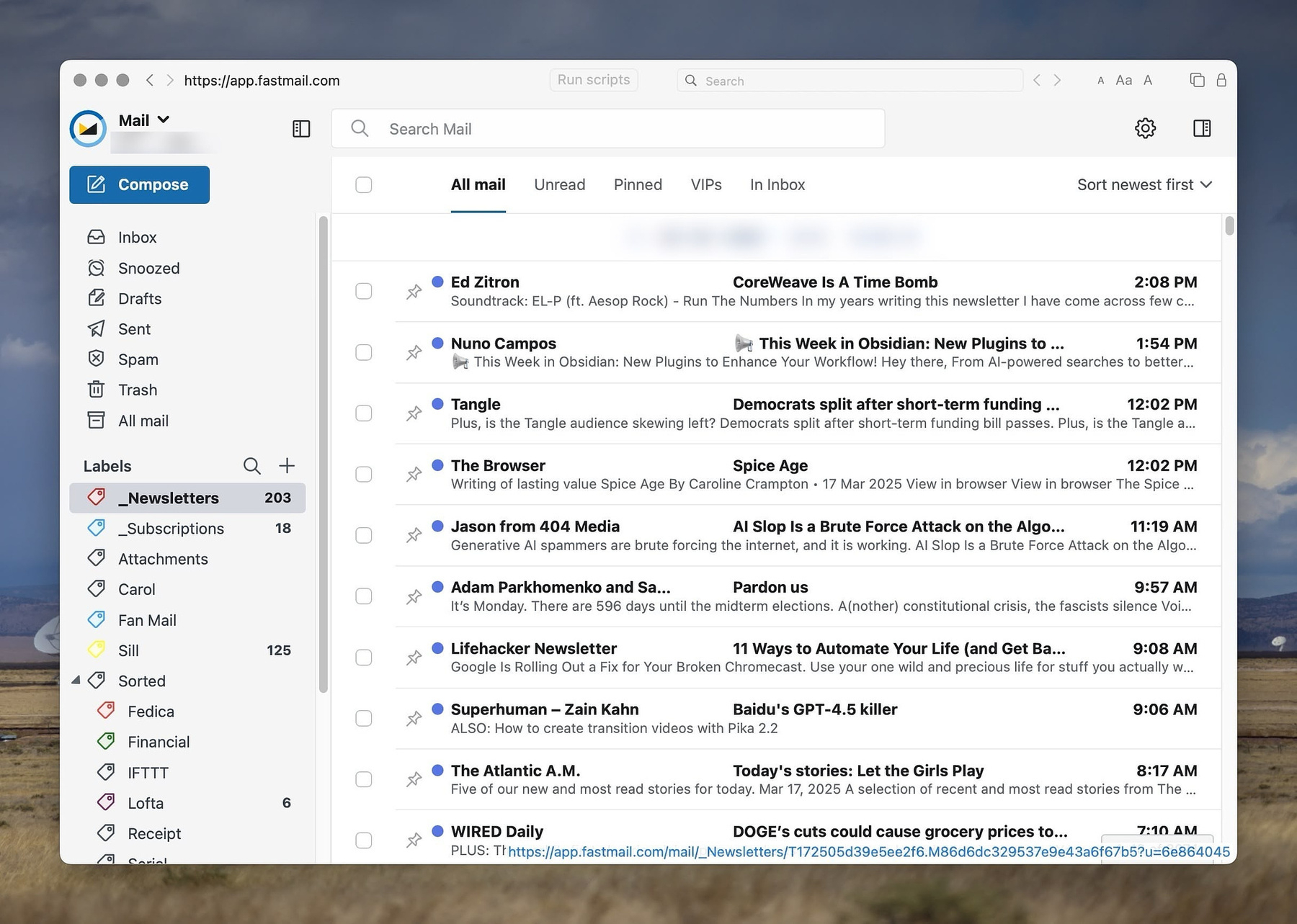
After using Gmail for twenty years, I recently decided to move to
a more privacy focused provider I could use with my own domain. I've
finally reached the tipping point with surrendering my data to big tech
in exchange for free services.
I chose Fastmail as my new provider. Fastmail works with just about any email client available. I don't need or want AI capabilities, nor do I have any complicated workflows for email. I use my account purely for personal communications and as a repository for subscriptions. It doesn't make sense for me to use a paid or subscription app for those basic needs, so I opted for a free Fastmail client, Fmail2. This tiny app (8MB) replicates the excellent Fastmail web client and adds a number of features.
- Multiple window support
- Default email client
- Running in the background
- Auto hide
- Tabs
- Dock item with badge
- Swipe support
- Secure
- Notifications
- Status bar menu
- Keyboard shortcuts
There were several reasons I chose Fastmail from among other options.
- Import of mail, calendar, notes, contacts and filters from Gmail
- Label support (folders are also an option)
- Robust SPAM filters
- 50GB of storage - 20 years of Gmail only used 8GB, so I think I'll be fine with 50GB on Fastmail
- Unlimited alias addresses
- Unlimited masked email addresses
- Ongoing import of Gmail
- Discount for family plan
Fmail2 is a 100% Swift app and runs natively on apple silicon. The developer is Arie van Boxel, who is also behind the excellent Startup Manager app.
Sensei - Do You Need It?
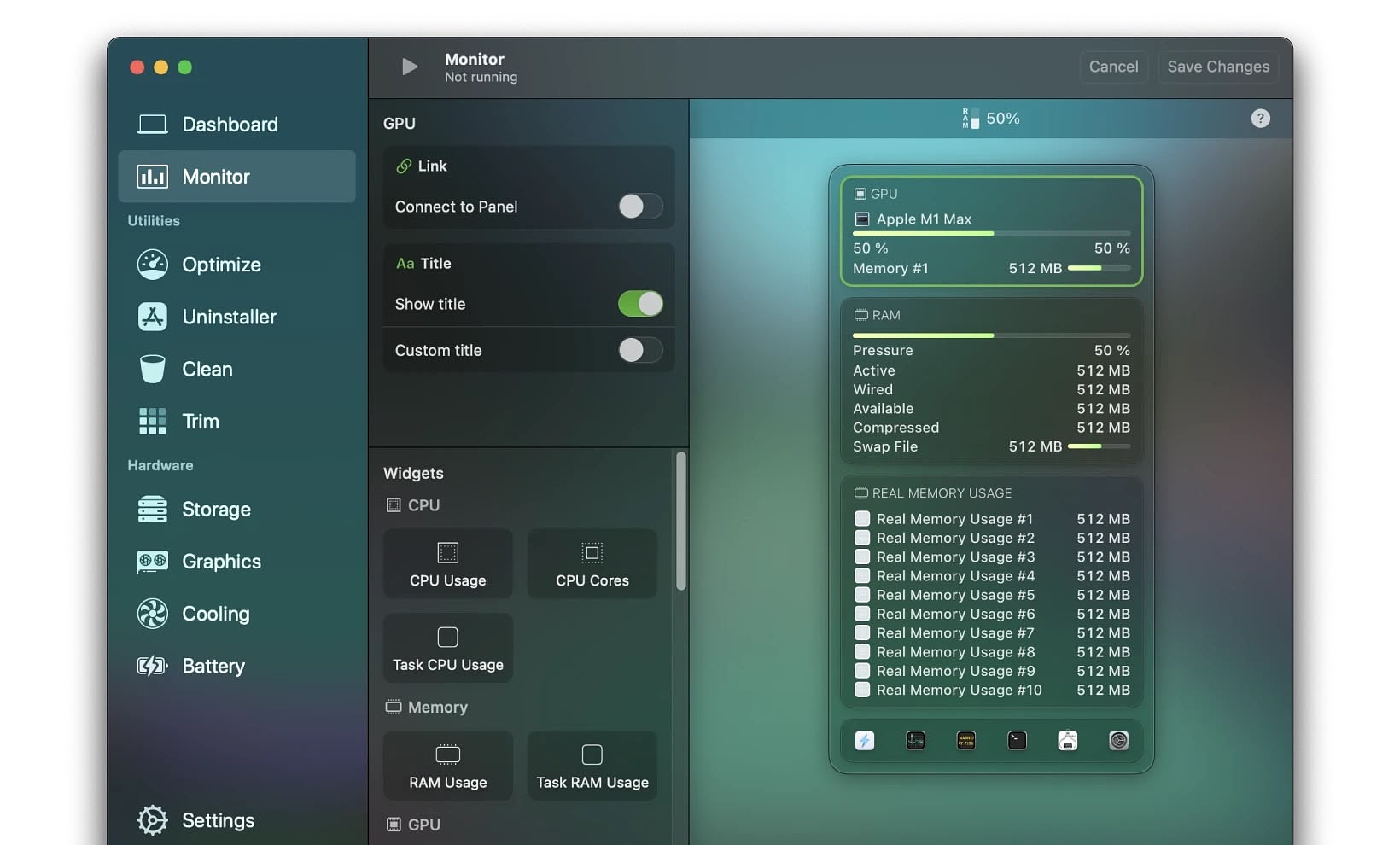
When it comes to Mac utilities, there are things that are helpful
to have, but that are not absolutely required. Many of the "nice to
have" features can be gained through installing various free, well
regarded applications. For people who don't want the hassle of
assembling a toolkit piece by piece, there are apps like Sensei by Cindori Software, for
optimization and information.
Sensei Features vs. Free Alternatives
- Hardware monitoring of CPU, GPU, RAM, temps, storage and battery. A free alternative is Stats
- Cleaning of old caches, logs, big downloads and leftover installation files. A free alternative is Onyx
- Uninstalling apps. If you just throw apps into the trash, which was once the accepted way to perform uninstallations, you can potentially leave behind GBs of files in ~/Library subfolders. Intelligent uninstallers locate and remove those files. Free alternatives are AppCleaner and Pear Cleaner
- Monitor hard drive health, Drive failures can sometimes be predicted, giving you time to back your data and replace your drive. A free alternative is Disk Drill.
- Battery Health. Batteries degrade over time and depending on how long you keep a laptop, may need to be replaced. Utilities like Sensei can tell you how much of your battery's orininal capacity is still viable. A free alternative is Coconut Battery.
- Drive benchmarking - measuring the speed of your hard drive isn't necessarily helpful for commercial software, but some special use cases require higher speeds. A free alternative is Blackmagic Disk Speed Test
- Startup analyzer - you may have more apps running in the background or at startup than your realize. I recently found five Microsoft remnants that didn't get uninstalled when I got rid of Microsoft 365. A fee alternative is Startup Manager.
Sensei is a subscription app that costs $29 a year for a license that covers three Macs. A similar product, CleanMyMac, by MacPaw, is included in Setapp.
SiteSucker for Mac - Affordable and Powerful
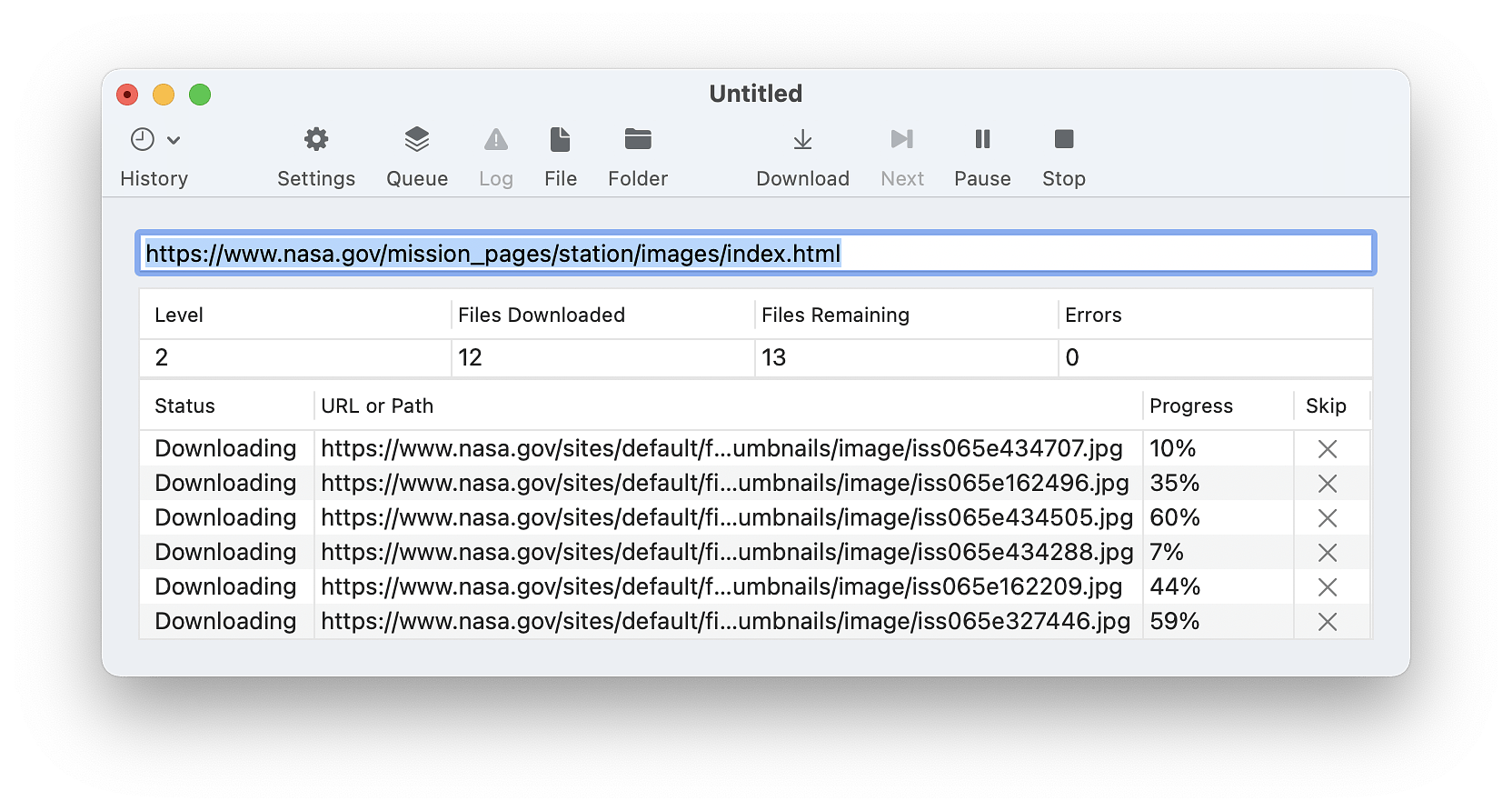
Today I downloaded and tested an app that's been on my radar for a
while, SiteSucker
for Mac by developer Rick
Cranisky.. You can give this app a top level URL, specify how many
layers deep you want to go and it will download an entire web site,
complete with supporting files like images and style sheets. It has
regex filters for anything you want to exclude. After I ran it the first
time, I read the error log and excluded the site that was causing issues
and it ran much better after that. SiteSucker has been under continuous
development since the birth of Mac OX in 2001.
The version available in the App Store is $4.99. It does not downloaded embedded videos. To get that feature you need to download the pro version of the app from the developer's website. Be prepared to an extra $1 for the pro version. The developer states :
"SiteSucker Pro is an enhanced version of SiteSucker that can download embedded videos, including embedded YouTube, Vimeo, WordPress, and Wistia videos. SiteSucker Pro can also download sites from the Tor network. You can try SiteSucker Pro for up to 14 days before you buy it. During that period, the application is fully functional except that you can download no more than 100 files at a time."
When I ran SiteSuckker against one of my blogs, it created a copy of the website on my hard drive that was indistinguishable from the site hosted by my provider. The internal links were pointed to the local files downloaded, while the external links still pointed to the Internet. I had a couple of external links that generated downloads of huge XML files, in one case 375MBs of them. There are reports from some users that they've filled up all the available hard drive space by changing the default settings and not monitoring the download. Don't do that!
You can create default settings or save the settings for different websites as individual files you can open if you wish to re-download a copy of a site.
CharmBar - Easy Dock Customization
Like many Mac users, I enjoy customizing the look of my operating
system. I particularly like the look of older, vintage icons from Mac
history, having spent a lot of memorable and enjoyable times on older
machines. There are several apps that let you make changes to program
icons, Replacicon
is a well known example, but Apple made it hard to alter systems icons,
Don't like the Finder face? Tough. Apple wants you to have it.
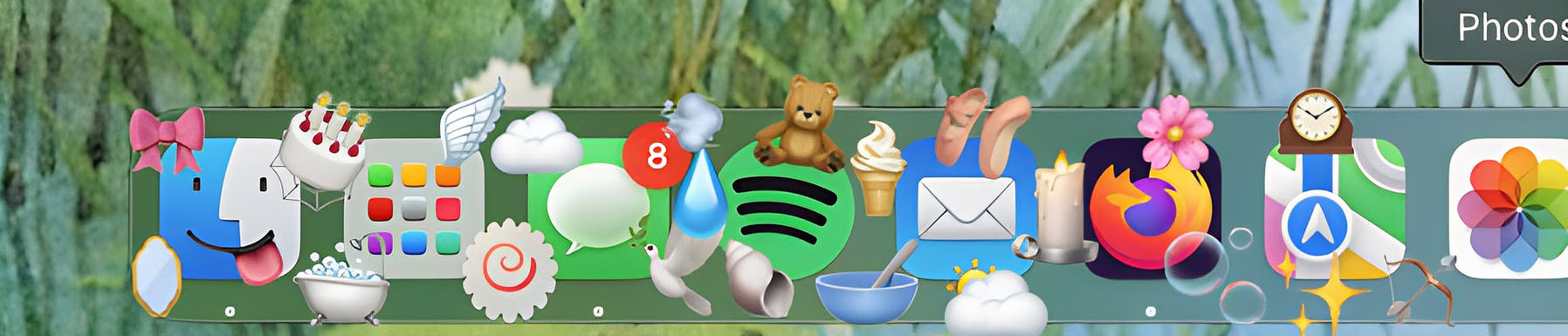
Enter CharmBar, a delightful little app from kepler.cafe, makers of DockDoor, another well thought out app that gives you Window previews when you hover the cursor over icons on the dock. Using Charmbar, you can alter or replace dock icons.with any emoji, jpg or png file. Its simple interface lets you create your own library of files. When you pick an application icon to add your own touches to, you select one or more of the images you've added to your library and overlay the original icon. You can completely cover it up or just add whimsical flourishes.
Your changes show up in real time. If you grow tired of the extra elements, they'll go away when you close the program, which runs from the menu bar.
Charmbar is a one-time purchase of $5 on Gumroad. One license code is good for installing the app on up to three Macs. There are no subscriptions and no invasive elements to suck away your data. The developer is active on Reddit, and doesn't appear to mind interacting with the community.
New File Finding App, Cling, Is Not Everything
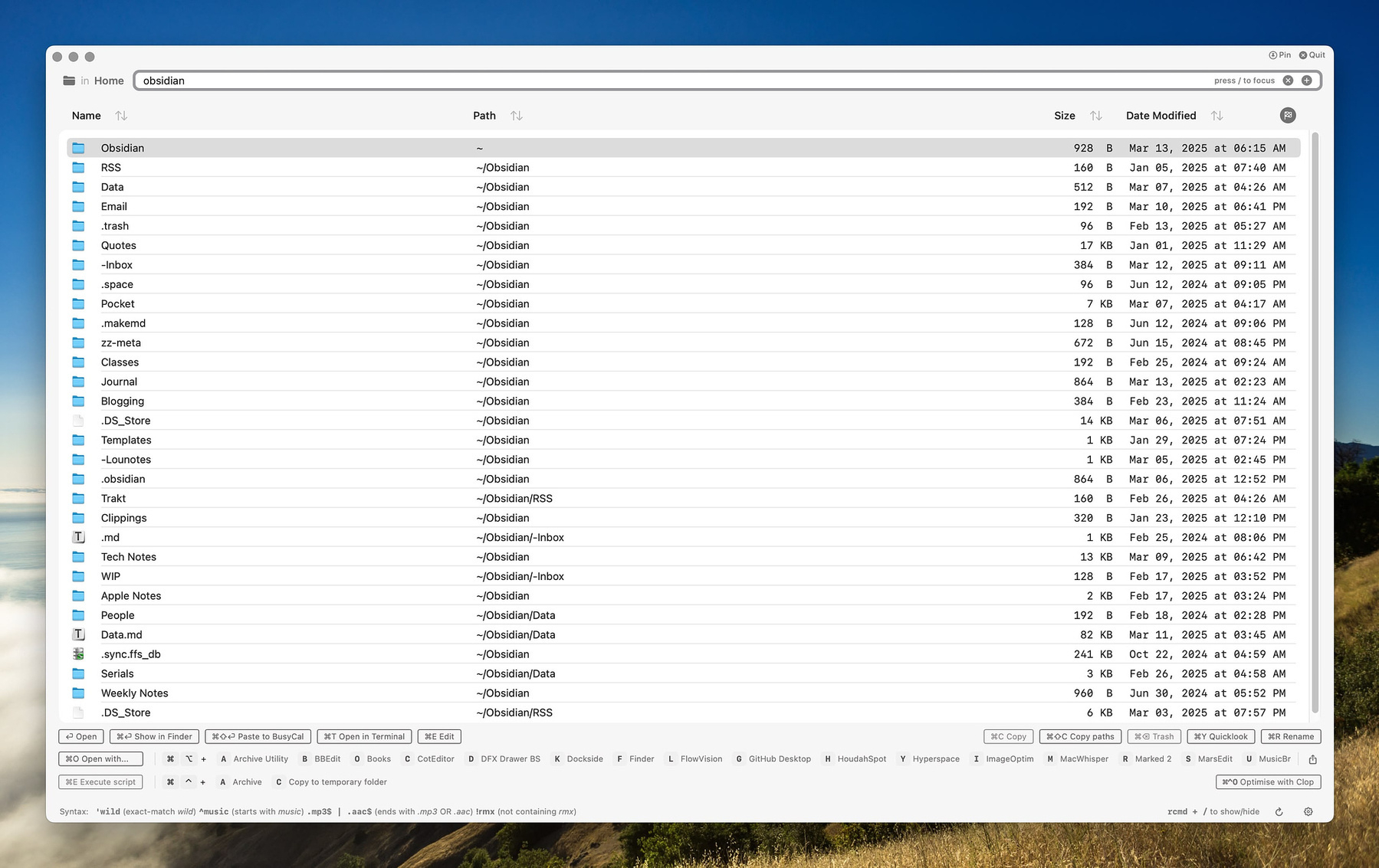
I recently saw a new Mac file finding app, Cling, announced on Macupdate and
Thriftmac. The description of
the app said that it brings fuzzy search to a utility with a GUI.
Searches with partial or misspelled file names are promised to work. The developer's website states
that the app is designed to be similar in function to the legendary
Windows file finding utility, Everything,
which is indeed, one of the best file finding apps I have ever used.
I've installed it for many users who needed to search network drives
containing thousands of files.
I read the documentation on the website which went into detail about the amount of CPU power consumed and the memory needed to run Cling. Logically, since it does not use the Spotlight indez like some other search tools, it n needed time after starting the first time to create its own index. The website said that it takes about five minutes. I gave it a couple of hours. I ran my first seach using the word Obsidian as my search term. I've written several articles and taken a lot of notes about the app by that name. I wanted to see what Cling would return. To my surprise and dismay, it returned a list of folders with Obsidian in the path name. I tried several other searches and discovered that including a file extension helped it locate files to some extent. The results Windows only shows 30 results by default, which you can adjust up to 100, but there is no way to have it show you all the files it finds that match what you are searching for.
To compare the results, I used Find any File, another Mac file-finding utility that builds its own indez. A search for Obsidian returned 4,734 hits, all of which it displayed for me to sort and search through. I did not have to try different file extensions, nor did my results contain unrelated folders that had Obsidian in the path name. I was much happier with the results.
Other Mac search utilities that worked better for me are:
In Search of the Perfect Quotes App

I have collected quotes for years, using various apps, Obsidian Notes, spreadsheets and Google Docs. I am still in search of the elusive perfect, feature packed app. Here's what I would like the app to be able to do.
Features I Want
- Import from a spreadsheet containing the quote, author, source, tag(s), date collected
- iCloud or other reliable syncing mechanism
- Export individual quotes in a format suitable for social media
- Universal (Mac and iOS)
- Automatic import of author pictures and biographies from Wikipedia or other source
- Share sheet in and out
- Searchable by tag or author
- A nice to have, but not absolutely required feature would be importing Kindle highlights
Apps That Have Some of These Features
- Quotemarks - Quote Notebook - This comes close, but it doesn't sync through the cloud and doesn't have a way to share anything but text to social media.
- Thoughts - Inspiration Manager - iOS only. Does not display a list of authors. Tag list is not in alphabetical order.
- Quotes - Organize and Recall - Mac only. Can't import anything other than a Kindle clippings file.
- Quotebook by Lickability - The OG quotes app dating back to 2011. It was removed from the App Store in 2016, but has remained usable. The deprecated version has good syncing via iCloud, automatic import of author pictures and biographies, import and export through CSV. There is no Mac version, however and it's sure to break one day since it is quintessential abandonware.
- Quotz - a nice iOS app of quality quotes, but you can't add your own. It does have good sharing features though
- BrainyQuote - Another nice quote data base with good sharing features, but with no way to add your own content
- TextShot - Works on Mac and iOS. Allows you to create your own quotes with title, author and source, but only saves image files of the quotes, no tagging, no searching.
- Quotify - No way to import existing quote collection except through one at a time manual entry. Have to use work around for tagging. Doesn't display a list of authors or tags. Has nice sharing features. The individual import feature is also well thought out.
Quote Sources
If you are interested, I have a repository on GitHub with Markdown notes from 500+ authors and public figures with one or more quotes from each of them. Browse the notes or download a ZIP of the whole thing. They are formatted for Obsidian, if that's your jam.
Goodreads also has an extensive quote library.
Swinsian Music App - The Answer to Feature Bloat
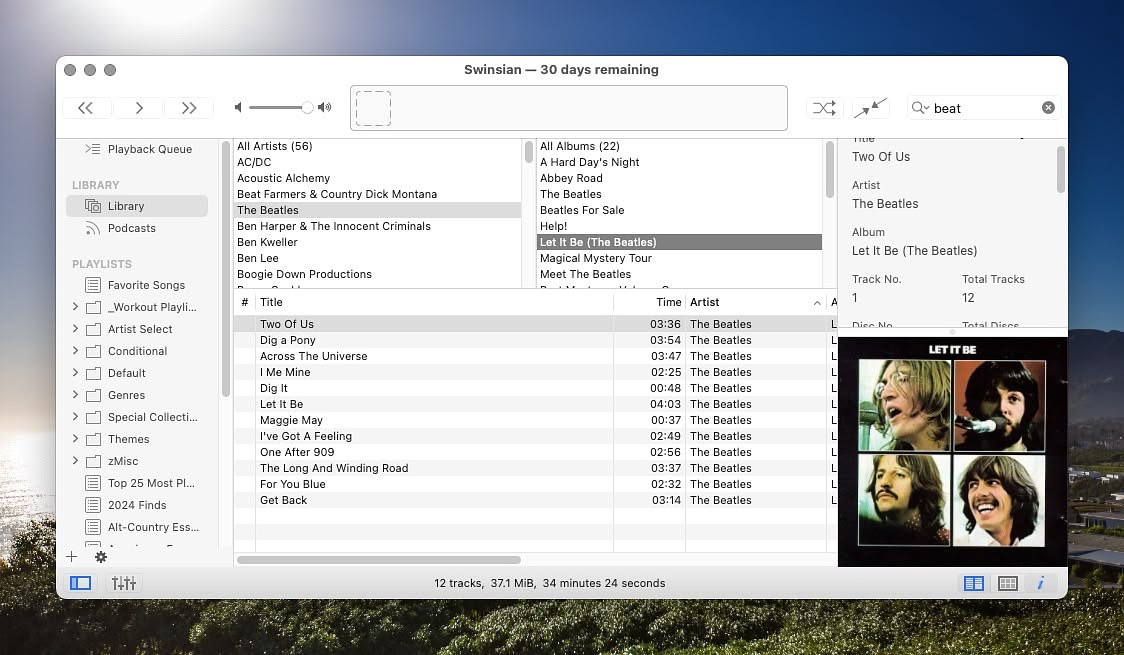
Swinsian is an app for playing
music that ticks every box in what a Mac based music player for local
libraries sgould be. I can think of no other app that exemplifies bloat
like Apple's Music app, a product desgned not for ease of use, but for
maximization of revenue. Someone in Cupertino decided that none of us
who had massive, carefully tagged collections of music files collected
over the years deserved an app to make thge best use of our tunes. They
decided we' were just going to stream and that we were going to be happy
doing it.
Swinsian took a backup of my iTunes (yes, iTunes) library from 2017, with 32K songs from 2.3K albums and imported the information in a matter of minutes, complete with play counts, ratings and playlists. The customizable interface is reminiscent of a time when iTunes just worked. Now that the information is imported, Swinsian will monitor the folder where I keep my music and automatically add any other files I place there.
You can download and use all of the features of Swinsian without limitations for 30 days, after which it requires a license costing $25. It's available at the developer's website.
Features
Customize
There are multiple ways to view tracks: art grid, column browser and track inspector, all of which can be hidden if you are into a minimal interface.
Organize
Tag multiple tracks at once with ease. Use regular expressions to find and replace tags, ensuring your music stays perfectly tagged. The Duplicate Finder comes in handy, helping you find and remove duplicate tracks with flexible criteria, keeping your library organized and clutter-free.
Control
Control playback with global shortcuts and the mini window. The customizable desktop art widget adds a nice touch to the interface.
Other Nice Touches
- Folder watching
- Album art fetching
- Playback Notifications
- Last.fm scrobbling
- Separate playlist windows
- Find and replace tag editing, with regex support
- Smart playlists
- Library stats
- Playback over AirPlay
- Automatic Podcast downloading
- Applescript control
Audiophile Information
- 10 or 31 band Graphic Equalizer
- Supports Flac, MP3, AAC, ALAC, Ogg Vorbis, WMA, WAV, Opus, AC3, AIFF, MusePack, DSF, and APE.
- Gapless playback
- Automatic changing of device sample rate
- Support for cue files and embedded cue information
Other Reviews
If You Need to Bake a Cake - Get Mela Recipe Manager
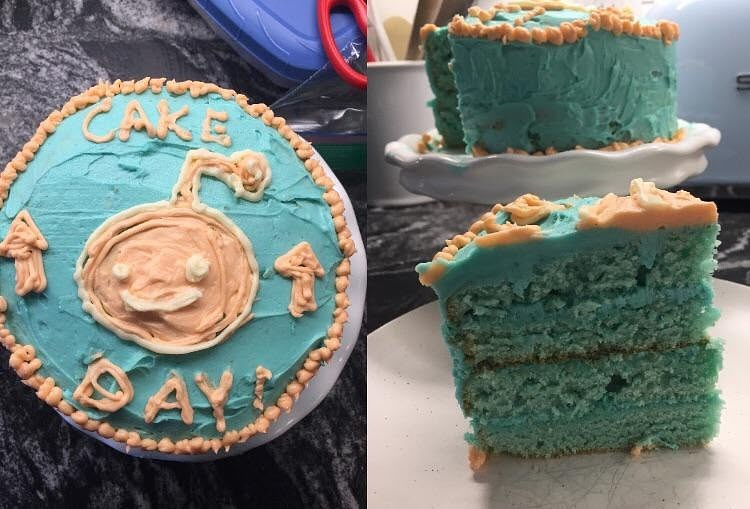
I've got cake on the brain today, for some reason...
I've extensively tested four different recipe management apps, all available in the App Store:
All of them are quality apps and they are not mirror images of each other. Anylist, for example has helpful features unrelated to groceries or cooking. It, along with Crouton, is a subscription app. Paprika is a one time purchase of $29.99. Mela, my pick for recipes, is only $9.99. The developer, Silvio Rizzi, is also responsible for the popular RSS app Reeder Classic and the chronological timeline app, Reeder. He's a talented developer but has a reputation for being difficult to get a response from. I don't have personal experience in that area. His apps work fine for me and I've never had to contact him.
Mela Features
- In app browser with preview - If you've looked for recipes online, you know they can be buried in SEO slop and lots of stories about how Aunt Nancy used to bake this cake. Mela helps avoid that by automatically extracting most recipes from wordy websites.
- Feeds - If you have favorite cooking blogs, you can subscribe to them from within Mela and read the recipes in the viewer.
- Cook Mode - Displays the recipe in a large, easy to read font and can load multiple recipes for the same meal
- Timers - In app timers to use when preparing meals
- Scanner - Scan and OCR recipes from cookbooks and magazines
- Apple Integration - Meal planning is calendar based and can be viewed and shared on devices whether Mela is installed on them or not. Grocery lists are managed in reminders and can also be shared on non-Mela devices.
- Printing - You can print Mela recipes
- Organizing - Create categories for your saved recipes based on your won criteria
The iOS/iPadOS version of Mela is an extra purchase, but it is only $4.99
Time Based App Launchers

Every night my Obsidian Vault
is synchronized to a folder on Dropbox. I use an app called Sync
Folders Pro, in which you can schedule tasks. The only problem is
that in order for the task to run, the app must already be launched.
There's no way I can remember to launch it when I'm done using my
computer for the day, so I had to find a way to have it launched for me
prior to the time the task is supposed to run.
I chose Keyboard Maestro to do it for me, since Keyboard Maestro can also quit the app after the task completes. I use KBM for a lot of things, so it wasn't like I had to spend extra money just to get that feature. There are other, less expensive and simpler apps that can do the same thing.
- Task Til Dawn - A Free Mac Automation App - Also automates some file management tasks, printing and browser based tasks
- Alarm Clock Pro - An insanely useful app for all sorts of things, app launching is just a single feature
- Shortery - The Missing Mac Automator - Unlike iOS, you can't trigger shortcuts based on conditions. Shortery takes care of that by running shortcuts when triggered by time of day, wi-fi connections, calendar events and a dozen other conditions
- Scheduler for Mac - Free Automation Utility - this app can launch scripts as well as appsto accomplish all sorts of tasks
- Running Cron Jobs on Your Local Mac - If you are a CLI pro, you don't need a third party tool to automate events. You can use crontabto run scripts that do all sorts of things for you on a time based schedule
- LaunchControl: The launchd GUI - This is another pretty technical app, one that l provides all the information you need to create or debug a launchd(8) service through an easy to understand GUI.
- How to schedule workflows on Mac - You can use the Automator app built into your Mac to create launchers for apps, documents and URLS and then activate those through a calendar alert. One of the available alerts built into the Apple calendar is the ability to open a file. If you just want to open an app, you don't even need to use Automator, just tell Calendar to open the app at time relative to the calendar event your created,
Some other time based tasks I use include:
- An Applescript to eject my backup drive in the morning before I wake up so all I have to do is unplug it. ChatGPT can write Applescripts pretty well
- An Applescript that moves tasks in Things 3 to a different data and time every night
- A shortcut that imports imports screenshots that meet certain conditions into a designated photo album every night
- Open and close an app on my two Macs at alternating times because I don't want it running on them simultaneously
- Before I retired, I automated the launching of the web page for my job's time clock systm so that I could clock in and out for the day and my lunch break
Using Joplin as a Reference Tool
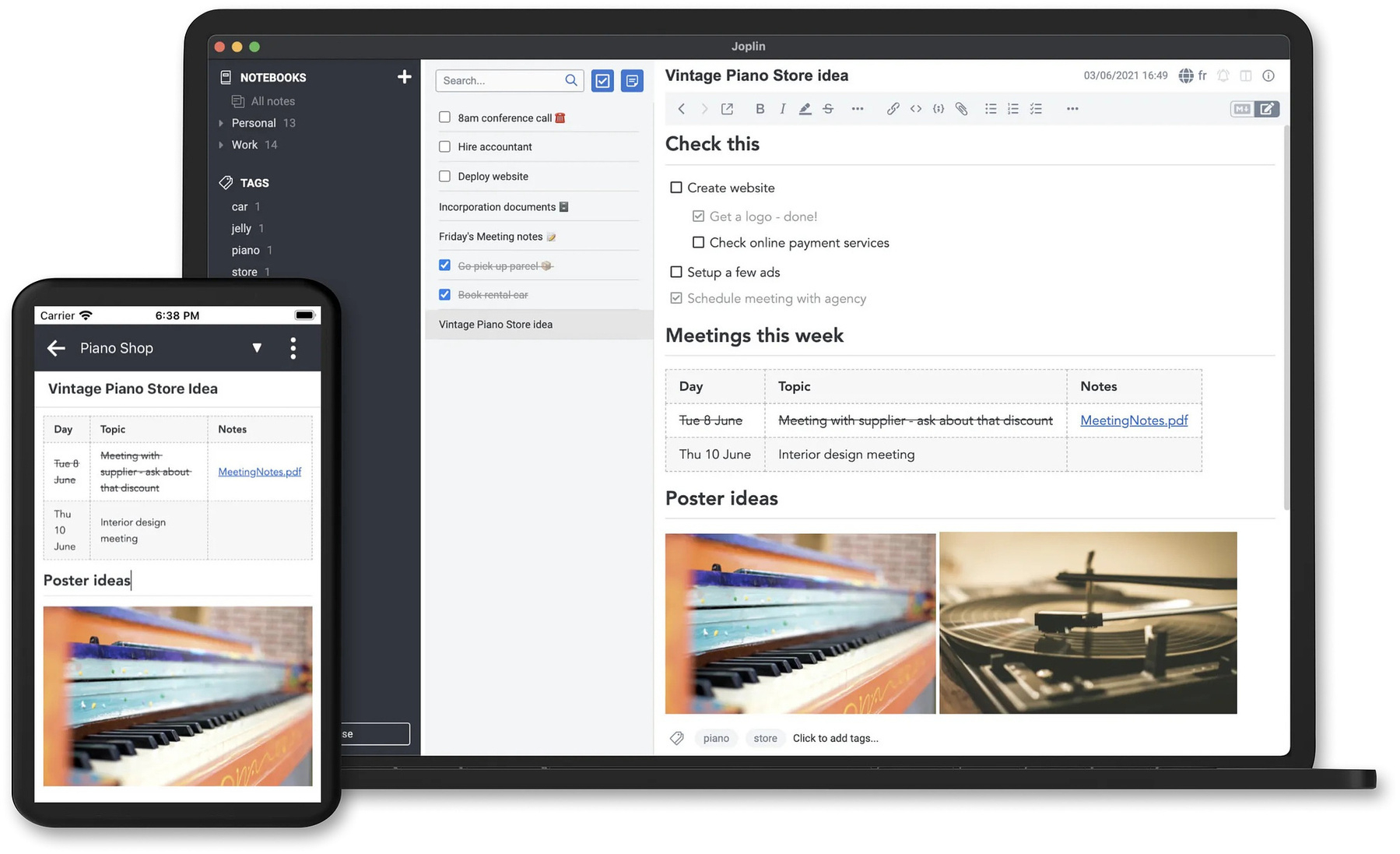
Joplin is a free and
open-source notes app. It's available for Macs, Windows, Linux, iOS and
Android. You can pay for Joplin E2E encrypted synchronization on its
servers which are located in France for those looking to avoid US based
cloud computing companies who are cooperating with the government. You
can also use DIY synchronization on other cloud accounts, like Dropbox
or iCloud.
My use case for Joplin is single purpose. After using Evernote from 2009-2023, I exported my data into ENEX files and closed my account due to its exorbitant pricing. I wanted a way to access that information without dealing with Evernote or its owner, Bending Spoons.
My preferred notes app is Obsidian, which is a plain text app that uses markdown. Many of my notes in Evernote were complex HTML emails that didn't translate well into Markdown. The material isn't anything I'll be editing but I want a way to use it for reference when I need it. Joplin did a good job of importing the notes in a readable format. It brought over all my tags. Organizing the information is easy inside Joplin. I elected to use Dropbox for syncing. It took a long time to sync 9K files even though the total file size is just over 1 GB.
I don't plan to add new notes to Joplin, but there is a web clipper available for those who can use that feature. There is also a plugin available that lets Joplin retrieve emails, something easily accomplished in Evernote but that requires considerable workarounds in Obsidian. Joplin doesn't have the same robust extension environment that Obsidian has, but there are several add-ons available.
Joplin is an electron app, so if the prospect of using an app of that nature is against your religion, move on along. I don't mind using electron apps, so it works for my purposes.
My Favorite iOS Time Killers

When you have a lot of time to kill and nothing but your phone,
what apps do you turn to as time killers?
My wife is running a 10-hour race this weekend. As usual, I'll be there as her crew, filling her water bottles, handing her food and bandaging blisters in short little bursts of time every hour. The rest of the time, I'll be left with just my phone as entertainment. Unfortunately for me, I don't game. Confessions of a Non-Gamer
I'm also not one to watch movies on a phone. After a few YouTube videos, I start to get restless. I'm a reader with attention span issues. I'm prepared to do without Internet, although hopefully I'll have connectivity. These will be my go to apps.
Pocket: Stay Informed - Pocket is where I save all the articles I want to read, but don't have time for. I also have a couple of RSS feeds that go straight to Pocket. I can add to it on my phone or my Mac. It's also integrated into Inoreader, my feed reader. You can download your saved articles for offline access.
Amazon Kindle - The cool thing about Kindle books is how little space they take up. I have hundreds of books saved on my phone.
NextDraft - I've been reading Dave Pell's daily links blog for over a decade. He suggests and comments on about a dozen stories a day and has a real knack for digging up fascinating content. He's as good at as anyone, even Kottke.
Medium: Read & Write Stories - Since its inception, I've read most Medium stories on Archive.ph. Then one of my cousins started a Medium blog and I got a subscription. It's been nice. Removing the friction and having the ability to subscribe to blogs has exposed me to a lot of good content.
Amerpie's Custom Tech Feed on Reddit - I will confess to being addicted to Reddit like no other place on the Internet. If you hang out in the wrong places there, it can be a real downer, but it also has some helpful and fun communities too. This is my collection of 37 tech related subreddits and where I hang out the most.
I don't think I'll die of boredom.
Local Send - Easy to Set Up and Easy to Use
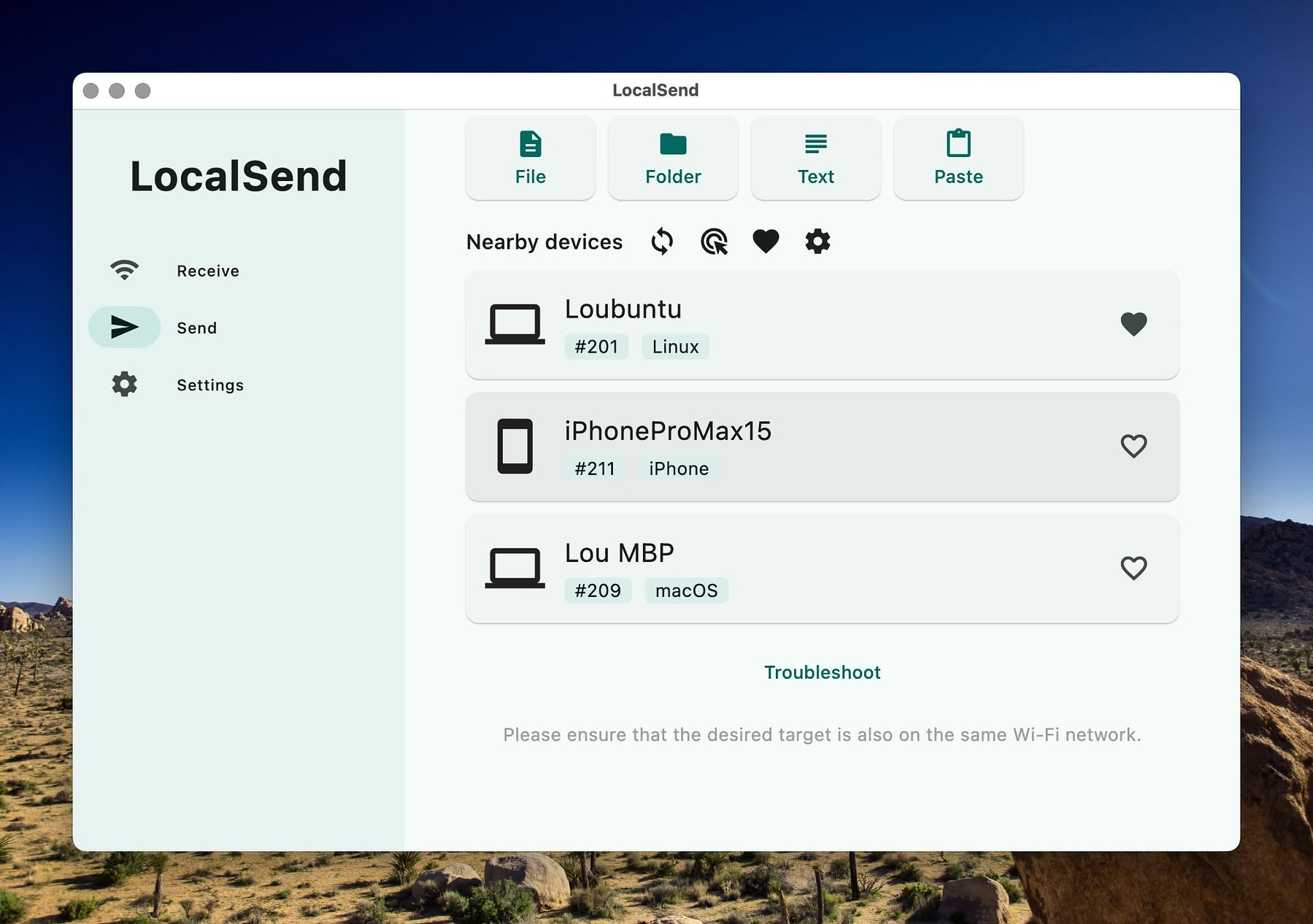
I am in the early stages of setting up a home network environment consisting of three Macs, a Windows 11 Thinkpad, an Ubuntu 24 Thinkpad, two iPads, an Android tablet and two iPhones. The quickest and easiest way to move files between all these devices has proven to be the free and open-source app, Local Send. As long as all of the devices are on the same wireless network and not logged into a VPN, all I have to do is make sure the app is running on each one to send files.
The settings on the Mac app are straightforward. You can send files, folders, text messages or whatever you have on your clipboard to other devices. The program assigns each device random names (e.g., Shiny Cherry), but you can call them whatever makes sense to you. For receiving files you can toggle between three settings: off, on for any connection and on for favorites, with favorites being other devices you've designated as being in that category.
You have control over the color and light/dark theme of Local Send. You can choose to close the window and have the program accessed from the menu bar. You can set several options for saving files: automatically save, require approval, require a PIN. You can also designate a single folder as the destination for received files and all incoming data will go there.
For security, you can whitelist and blacklist network interfaces. All of them are whitelisted by default. If you need to change the default port, you can do that as well as change the default discovery timeout. Encryption is on by default but it can be turned off. Local send does not require that your network be connected to the Internet. The program collects no data from you to send to the developer.
You can inspect the code and read the documentation on GitHub. Mac Users can get the app from the App Store. It is also available through Homebrew.
brew install --cask localsend
Cog - Free and Open-Source Local Only Music Player
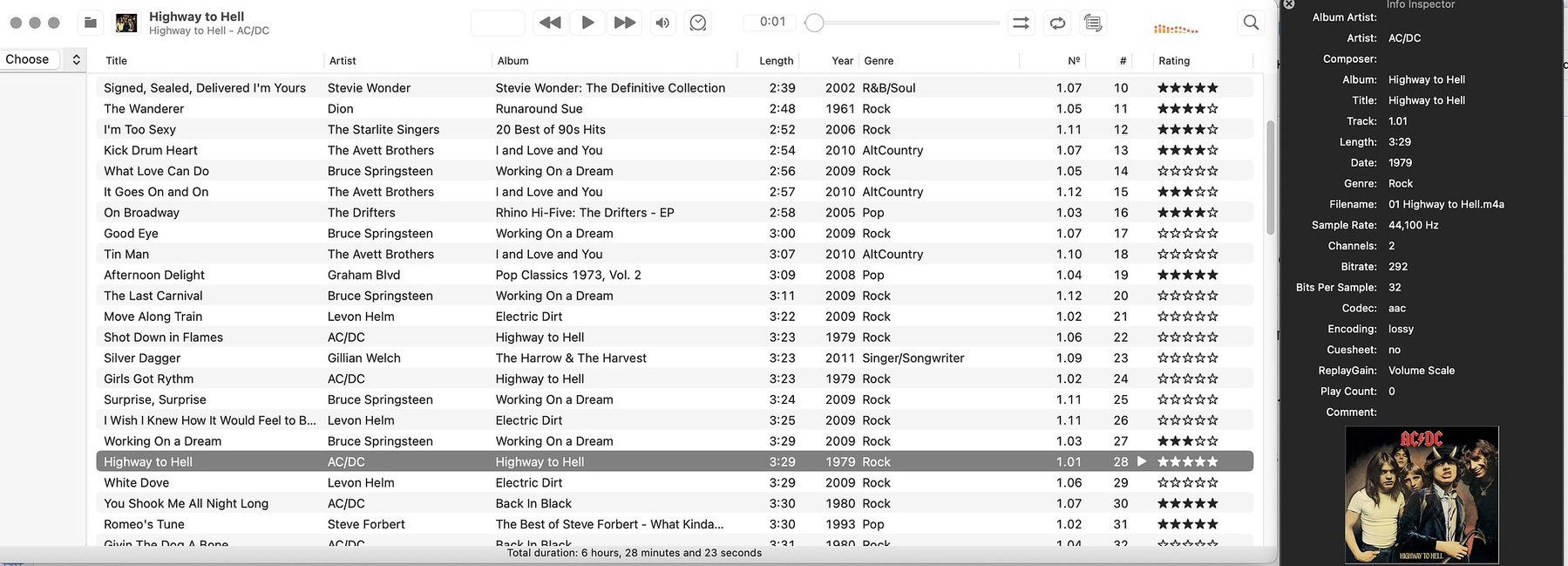
Cog is a free and open-source
music player that can read and display metadata from dozens of formats,
including AAC, MP3, ALAC, FLAC, Ogg, and WMA. It features playlists,
ratings and a mini player. No data from the app is sent to the Internet.
Your listening habits don't become data for some privacy sucking
mega-corporation.
In the spirit of detaching from big tech as much as possible, I looked for a full-featured music player for my collection of songs and albums in various formats. I needed something robust enough to handle over 30K files without choking. Since the songs in my music folder all have the correct metadata already, I didn't need the ability to edit it. The initial import took some time, but it is a process that doesn't have to be repeated.
Cog reads files where they exist on your disk. It's perfectly able to use music files already in your iTunes library, if you have one, or it can read from other locations, including external drives.
Cog is a versatile audio player with global hotkeys, and desktop notifications. You can shuffle both albums and tracks, repeat single songs, albums, or even whole playlists. It can play music from the internet, including livestreams and hosted files. It even supports Apple’s HTTP Live Streaming (HLS) using FFmpeg. It can also get live metadata updates from continuous streaming servers, like Shoutcast, Icecast, Ogg Vorbis comments, and timed ID3v2 packets, if the streamer uses them. Furthermore, it can even show you a cue sheet, which is like a list of songs in the order they’ll play. It can also show you album artwork for each song, both inside the cue sheet and outside. It can store album artwork in different formats, like JPEG, PNG, GIF, WebP, HEIC, or AVIF. It also has a graphic equalizer and a spectrum visualization in the toolbar or a separate window. And if you have a sound device that supports spatial audio, it can use that too. It also has multiple MIDI synthesizers, including the system synthesizer (which works with SoundFonts or the system GS bank) or BASSMIDI (which needs SoundFonts). It supports a number of audio formats, including some that you might not have heard of before, including obscure game and console formats
Cog is available on the developer's websiteand in the Mac App Store. If you are running an older version of macOS, you can download versions that work with them too.
Thanks to @dhry@mastodon.social for the tip on this app.
My App Wishlist

I spend a fair amount of time looking for apps to test and review. While, I seem to concentrate heavily on apps for macOS, I am also fascinated by the solutions developers come up with to get tasks done on the iPhone and iPad. I keep running lists of candidates for AppAddict and for my personal use. I'm sharing this today and hoping to hear back from folks who have opinions on the apps on this list or suggestions for alternatives. Let me know, pro or con, what you think about these.
- Usage Device Monitor - Usage is a tool to monitor your device's activity, data usage, connection speed, and more.
- Annotable Annotation & Markup - Annotable is the most full-featured all-in-one image annotation tool.
- Infuse • Video Player - gnite your video content with Infuse -- the beautiful way to watch almost any video format on your iPhone, iPad, Apple TV, Mac, and Vision.
- Keep It Mobile - Keep It for iPad and iPhone is a powerful notebook and document organizer that can be used on its own or in conjunction with Keep It for Mac, available separately.
- Avast Security & Privacy - Protect your device from online threats and intruders, keep your email accounts safe from scams, browse safely on public Wi-Fi, and stay in control of your online accounts.
- Elgato Stream Deck Mobile - Stream Deck Mobile is a full-fledged recreation of our iconic Stream Deck keypad. Now with an all-new design, more freedom to customize, and powerful features exclusive to iPhone and iPad.
- Timery for Toggl - Enhance your Toggl time-tracking experience with Timery! Start your most-used timers with one click. Edit your recent time entries easily.
- Broadcasts - Broadcasts 3 introduces a beautiful new Mini Player, revamped Search experience, and a new Artwork Chooser to help style your library.
- GizmoPack - Bring your shortcuts to the next level with GizmoPack!
- one sec screen time + focus - Fight the social media algorithms and win back control over your social media usage & your subconsciousness!
- Redirect Web for Safari - Control your browsing with Redirect Web. Set custom redirect rules to navigate your favorite sites automatically.
- AirScrobble Last.fm Scrobbler - Welcome to AirScrobble--the ultimate way to scrobble everything from real life and your device directly to your Last.fm profile! Whether you're grooving to vinyl, discovering tunes on the radio, or catching jams on social media, AirScrobble makes tracking and scrobbling a breeze.
- Up Ahead Countdown Widgets - Up Ahead is a playful, beautiful way to keep track of everything you're looking forward to. Create events in seconds, and build yourself an eclectic timeline full of birthdays, weddings, holidays, vacations, game releases, sporting events, or anything coming up that brings you joy.
- OASIS AI - Create perfect writing in any format just by talking. AI transcribes your natural speech, then rewrites it as a professional email, blog post, college essay, LinkedIn post, text message, outline, TikTok video script, pop song & more.
- AI Journal & Diary - Reflectr - Transform your journaling experience with Reflectr, your AI powered private journal, designed to help you understand and navigate your thoughts more effectively
- Automadon - Automadon provides a suite of Shortcuts actions for Mastodon with support for multiple accounts. Actions available within Shortcuts include:
- HashPhotos - HashPhotos is the ultimate alternative to the Photos app.HashPhotos is the essential photo app for your iPhone/iPad, designed to revolutionize the way you manage, edit, and bring your memories to life.
- BookBuddy My Library Manager - BookBuddy is a powerful book management app that gives you access to your entire book catalog, anywhere. Using BookBuddy is fun and easy, allowing you to quickly find any book in your library, share your favorite books, and keep track of borrowed and lent books.
- Roadtrippers - Trip Planner - Discover the open road and the great outdoors with ease. Roadtrippers, the \#1 road trip planning app in the USA and Canada
- Photomator – Photo Editor - Photomator is a photo editing powerhouse, offering incredible tools for enhancing, retouching, and managing your photos. It includes an extensive collection of cutting-edge color adjustments, automatic selections powered by AI, powerful batch editing features,
- This Easy Photo Labels - Tell the whole story by adding pointers, labels, descriptions, and commentary to your photos.
- Noir - Dark Mode for Safari - Noir is a Safari extension that automatically adds a dark mode to every website you visit.
- Nintype - Transform your iPhone or iPad into a highly productive device where you can actually type relatively quickly with it - so writing emails, reports and articles are much nicer, because you can type faster on the iPad/iPhone than most people can on a desktop keyboard!
- Stickier Mobile - Old-school sticky notes with a few new tricks.
- Camera M - Pro Manual Camera - Camera M is a professional and modern camera designed to do one thing exceptionally well -- to help you capture beautiful photos in the highest possible quality with powerful and precise manual camera controls akin to a DSLR.
- Calendar 366 Events & Tasks - Appointments and to-dos, meetings and deadlines, birthdays and dates - make the most of your time with Calendar 366! Anything a calendar can do... Calendar 366 can do better - and all of its functions can be adjusted easily and intuitively
- Kino - Pro Video Camera - Make great video easy! Kino lets you just press record and create cinematic video with color presets created by expert filmmakers--no edit required. Plus, with "AutoMotion," the app automatically creates that smooth "film look" you see at the movies. Shoot great video with no film school required.
- Mela - Recipe Manager - Mela is a simple, elegant and modern recipe manager that syncs with iCloud.
- Just a Simple Image Converter - Experience the ultimate image transformation tool with our versatile Image Converter app. Seamlessly convert a wide range of image formats, including JPG, PNG, JPEG, GIF, PDF, WebP, BMP and HEIC all in one convenient application.
- Habit Tracker - Checker - Checker is an app that can help you make new habits stick and be more consistent with any goal you're working towards. It provides an easy way to check in on the actions you're tracking and then displays your progress in a calendar grid, making it easy to see patterns and potential areas for improvement.
- SnipNotes Notebook & Clipboard - SnipNotes transforms your Mac into a hub of creativity and efficiency, seamlessly syncing with your iPhone, iPad, and Apple Watch. Jot down inspirations directly from the menu bar and enrich your notes with images and diverse formatting options. Effortlessly pull in data from the web and other apps with a simple drag or let SnipNotes safeguard your clipboard content for later recall.
- Cheetah Note - Cheetah Note is a simple yet powerful note app.
- Bookmark Management - Trace - Trace: Capture Screenshots, Bookmark & Organize. Trace revolutionizes the way you capture screenshots, bookmark content, and organize your digital discoveries. Seamlessly integrated with your favorite apps like Instagram, X (formerly Twitter), Facebook, YouTube, Wikipedia, and more, Trace empowers you.
Using Kagi Search Engine on a Mac - Software and Tips

Subscribe to the AppAddict Newsletter
For those not familiar with it, Kagi is a subscription based,
no-ads, privacy-focused search engine that provides an extreme level of
customization. Unlike DuckDuckGo, which relies on Bing for most of its
results, Kagi has its own scraper and while it does make API calls to
other search engines, it is not totally reliant on them. Understandably,
not everyone needs or wants to pay for privacy, but for people in
vulnerable communities or who are politically active in ways that aren't
supporting their nation's current government, it is a valuable resource.
Privacy Pass
Kagi recently released Privacy Pass, " a privacy feature that allows you to use Kagi Search without revealing your identity. When enabled, it lets you perform searches anonymously while still verifying that you're a valid Kagi subscriber. Think of it as a digital token system - similar to getting tokens at an arcade, where once you have them, you can use the services without showing your ID each time." To use Privacy Pass, you need to install a browser extension that enables it.
Kagi Search Extension
Kagi also has a search extension that automates setting it as your default browser and also provides for continuing a search session is a private browsing window.
Using Kagi with Safari
Since Apple limits the selection of custom search engines in Safari, due no doubt to the $18 billion that Google pays them for the right to be Safari's default search engine. There is a good work around though, Xsearch for Safari lets you instantly switch between multiple custom search engines from the Safari address bat. It works in macOS, iOS and iPadOS.
Kagi Features
Kagi has zero ads and zero trackers. It's so secure that what you search for can be totally separated from your identity. You can customize your results easily. If, like any sane and rational person, you don't want to see any stories from the popular news channel that was fines $700 million for lying on the air last year in your search results, you can block the site from ever appearing. If you realize just how many answers to life's questions can be found on Reddit, you can tell Kagi to prioritize the site. In fact, you can customize up to 1,000 sites, either by blocking them or by promoting results from them.
I created a list of sites that are over-represented in search results because of search engine optimization,. It's not that their content is good. It's that the sites are engineered through content farming and keyword usage to appear high in search results. You can copy and paste the list right into Kagi's settings and never have the sites pollute your searches again. Because of problems with the mainstream media in the US, I also created a list of alternative news sources that I told Kagi to prioritize.
You can make your own custom search environment. Kagi calls that a Lens. Kagi Lenses allow you to customize your searches by specifying which websites (and other parameters) you see in your results. They provide a few Lenses to get you started, such as one to search only online discussions and forums.
Have more questions about Kagi? Get all the answers here.
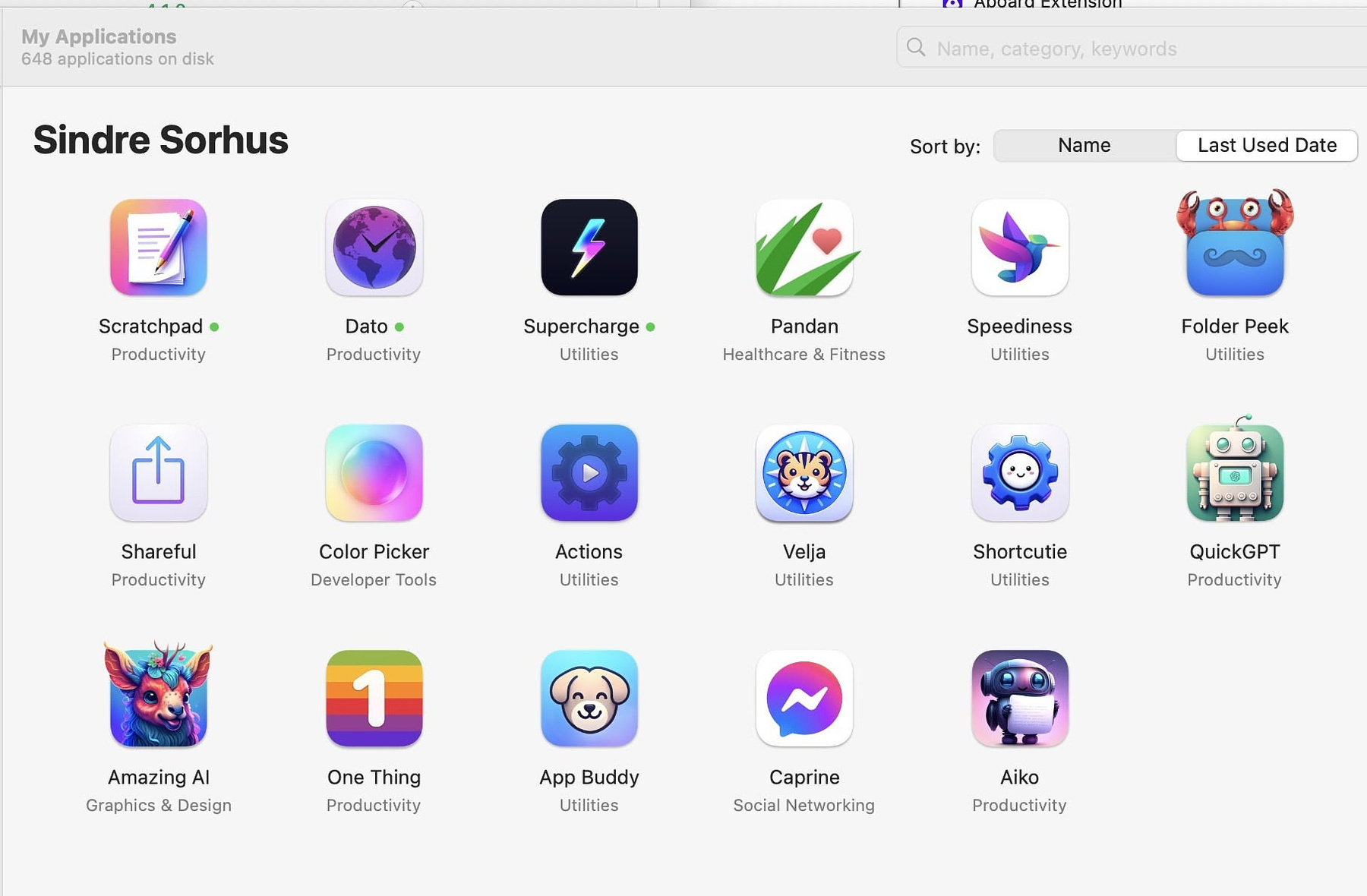
Lots of Updates from Sindre Sorhus
Subscribe to the AppAddict Newsletter
Whether you know who Sindre Sorhus is or not you still may be
using one of his many popular
and mostly free apps. Sindre is a full-time open-source developer
currently based in Thailand who is responsible for more than 1,000
packages at npm, the world's largest software directory. In his spare
time (LOL) he creates wonderful macOS and iOS apps.
He's recently been on a tear with updates, adding new features and dealing with bugs. A couple of apps that used to be free are now paid because of the support demands, according to Sorhus. Most of his recent updates require macOS, but older versions are still available for users who have not upgraded.
- New actions added:
- Get System Color
- Get All System Colors
- Format Text List
- Is Location Services Enabled
- Is Screen Saver Active
- Send Distributed Notification
- Wait for Distributed Notification
Shareful makes the system share menu even more useful by providing some commonly needed share services. The latest release requires macOS 15.
- Copy - Copy the shared item to the clipboard and so you can quickly paste it into another app.
- Save As - Choose a directory to save the shared item to.
- Open In - Open the shared item in any app.
Pandan is a time awareness tool, not a traditional time tracker or break reminder. It shows you how long you have been actively using your computer, to make you aware and let you decide when it's time to take a break.
Folder Peek is the GOAT of menu bar access apps. I liked XMenu from Devon Technologies, but Folder Peek has more features and is just as rock solid in performance. Folder Peek lets you put folders full of whatever you want on your menu bar. You can make a folder with app aliases for your most used apps or add your entire applications folder. Give your documents folder its own menu bar icon or add an alias of it to another folder. My personal setup is a single folder with aliases for:
- Home folder
- Documents
- Downloads
- Screenshots
- Approximately 20 apps
Generate images from text using Stable Diffusion 1.5. Simply describe the image you desire, and the app will generate it for you
- Quickly copy, paste, and convert colors in Hex, HSL, and RGB format
- Show as a normal app or in the menu bar
- Toggle it from anywhere with a global keyboard shortcut
- Make the window stay on top of all other windows