
Five Unique Free Apps
Here are five free Mac applications you've most likely never come across. A project template/scaffolding automator, a local music player, resize batch images, a posture app that takes Advantage of the AirPods motion sensors, plus a financial calculator for cash flow simulation.
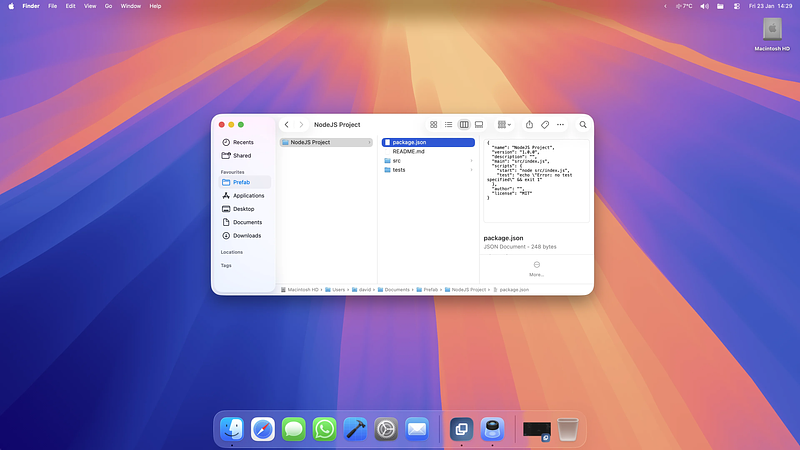
- Prefab - Capture a folder structure as a reusable "blueprint," add variable placeholders to names and contents, then deploy it anywhere via the app, menu bar, or Finder right-click. Deployment can chain actions: git init, npm install, opening the project in an editor, arbitrary terminal commands. Built for developers but pitched at anyone with a repeatable folder-setup ritual: lawyers, researchers, creatives.
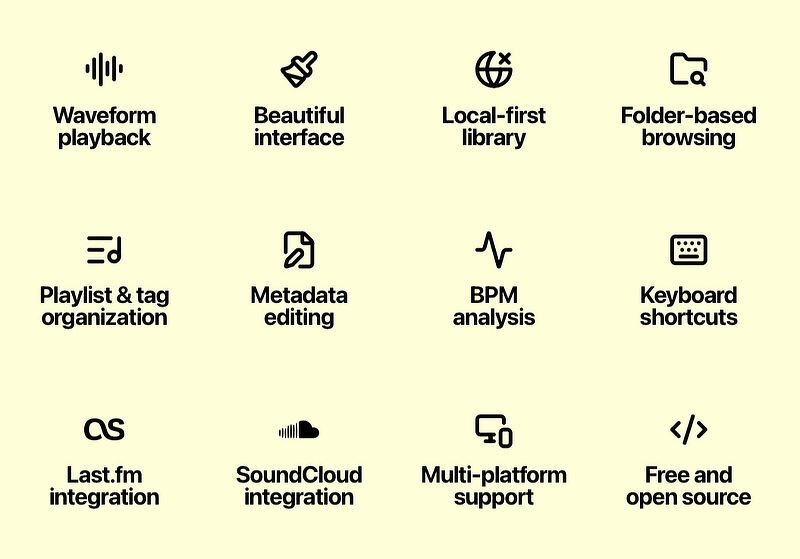
- Playhead - Local-first music player for people who keep their own files instead of streaming. The pitch is "waveform-first": it generates and caches waveform data so you can see and scrub a track's structure instead of a plain progress bar. Two browsing modes, Library and Folder (preserves your existing structure), aimed at DJs, producers, and messy real-world collections. Supports MP3, FLAC, WAV, AIFF/AIF, M4A, OGG, OPUS, AAC; includes a metadata editor.
- IResize Pro - Batch image resizer. Set a target width or height, it scales proportionally and keeps your originals. Outputs JPEG/PNG/TIFF/GIF; imports JPG/PNG/GIF/TIFF/HEIC/BMP/WebP. Includes batch renaming, an optional colored border, and an upscaling prompt for undersized images.
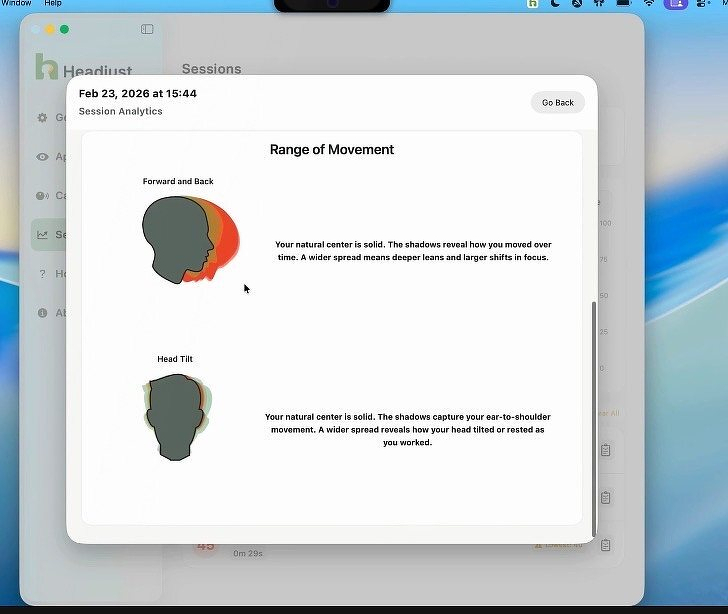
- Headjust - Native Mac app that uses the head-motion sensors already built into compatible AirPods/Beats to make posture drift visible without policing it.
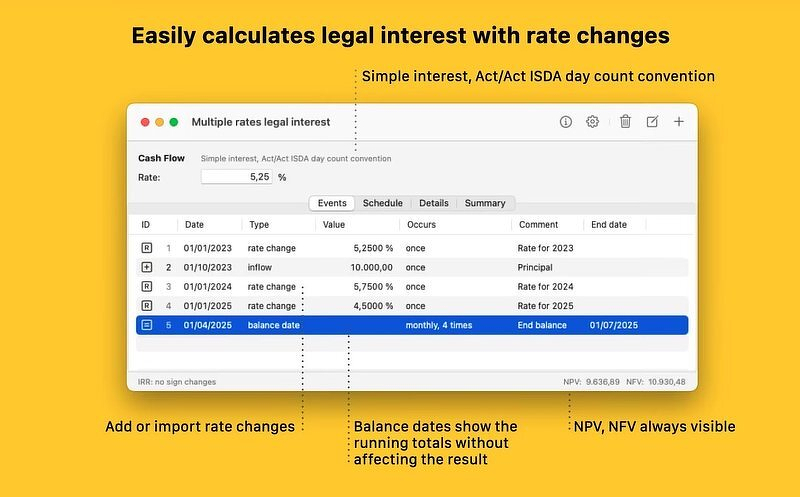
- InterestThing - Mac-only financial calculator for modeling cash-flow problems (loans, leases, valuations, financial planning) as a timeline of discrete events instead of a fixed template. Each event -- inflow, outflow, unknown, fixed principal, interest-only payment, rate change, balance date -- can be one-off or periodic, fixed or gradient amounts, paired with one of four interest types (simple, capitalized simple, capitalized simple with US Rule, compound) and three time-interval methods